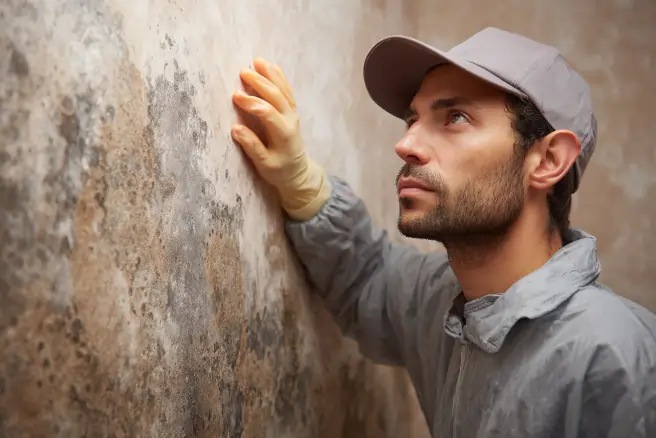
Certifications and Licenses
- Verify that the company holds the appropriate certifications for mold remediation and testing.
- Licensing requirements vary by state, so confirm that the company meets your local regulations.
Experience in Mold Testing
- Evaluate their experience in dealing with different types of mold issues.
- Check whether they have handled similar cases to yours—some molds, like Stachybotrys chartarum (black mold), require specialized procedures.
Inspection vs. Remediation Services
- It’s often ideal to hire separate companies for inspection/testing and remediation to avoid conflicts of interest.
- A detailed visual assessment
- Air quality sampling
- Surface testing or swab tests
Insurance Coverage
- Confirm that the company holds liability insurance specific to mold services.
- Request proof of coverage to safeguard yourself against potential damage during the remediation process.
Transparent Pricing
- Avoid companies offering vague estimates or prices far below industry standards.
- Request a detailed breakdown of costs for both testing and remediation services.
Key Questions to Ask Potential Mold Companies
When vetting potential companies, ask these questions to determine their suitability:
1. Do you hold certifications from recognized bodies like IICRC or NORMI?
2. Can you provide references from previous clients?
3. How do you differentiate between safe levels of mold versus contamination requiring removal?
4. Are your technicians trained in containment measures during remediation?
Comparison Table: Essential Services Offered by Reliable Companies
| Service | Why It Matters | Red Flags |
| Visual Inspections | Identifies visible growth areas | Rushing inspections without thorough assessment |
| Air Quality Testing | Detects airborne spores often invisible to eyes | Lack of proper equipment or refusal to share lab results |
| Containment Protocols | Prevents cross-contamination during removal | Using improper barriers or inadequate negative air pressure systems |
| Post-remediation Verification | Ensures all traces are removed before clearance | Failing to offer follow-up testing after completing remediation |
By carefully evaluating these criteria, you’ll be better equipped to select a professional company that ensures safe and effective resolution of any mold issues within your property.
Understanding Certifications and Licensing for Mold Remediation Lakeland, FL Services
When hiring a mold testing service, certifications and licensing are essential indicators of professionalism, trustworthiness, and expertise. Mold detection is a specialized practice that requires a thorough understanding of environmental science, building systems, and health impacts. Without proper accreditation, there is no guarantee that the company follows industry standards or employs reliable testing methods. Below are the key reasons why certifications and licensing matter for mold testing services.
Proof of Competence and Training
Certified professionals undergo extensive training to understand mold’s behavior, growth patterns, and potential dangers. Some widely recognized certifications in the mold testing industry include:
– Certified Mold Inspector (CMI): This designation ensures that inspectors are trained to identify various types of mold contamination accurately.
– Certified Indoor Environmentalist (CIE): Focuses on indoor air quality and environmental factors related to mold exposure.
– Council-certified Microbial Consultant (CMC): This advanced certification demonstrates expertise in microbial investigation and analysis.
By hiring certified professionals, you can be confident that they have the technical knowledge necessary to assess your property thoroughly.
Adherence to Industry Standards
Licensed mold testing companies must comply with federal, state, or local regulations regarding safety protocols, sampling techniques, and reporting procedures. Organizations such as the American Industrial Hygiene Association (AIHA) or Institute of Inspection Cleaning and Restoration Certification (IICRC) set these benchmarks for quality assurance.
A properly licensed company:
– Utilizes approved testing methodologies like air sampling or surface swabbing to detect mold. – Follows strict lab analysis protocols to minimize errors. – Provides clear documentation with actionable results.
Consumer Protection Benefits
Licensing serves as a safeguard for consumers by ensuring that companies operate within a legal framework. Unlicensed providers may cut corners or misrepresent their qualifications. By choosing licensed services:
1. You gain access to official complaint mechanisms if issues arise. 2. Financial risks are reduced since reputable companies often carry liability insurance. 3. You avoid scams or substandard services offered by unregulated operators.
Enhanced Credibility in Reporting Results
Accurate reporting is crucial when dealing with potential health hazards like mold contamination. Certified specialists use precise terminology in reports while adhering to ethical practices such as transparency in findings.
| Section | Description | Example Details |
| Inspection Summary | Overview of affected areas | “Visible growth found in basement.” |
| Sampling Methods | Types of samples collected | “Air samples taken using spore traps.” |
| Lab Analysis Results | Quantitative data on spore concentrations | “Elevated Penicillium levels detected.” |
| Recommendations | Next steps based on findings | “HEPA vacuuming recommended.” |
Without proper credentials, there’s no assurance your inspector can provide thorough documentation or unbiased conclusions.
How Certifications Reflect Professional Accountability
Licensed providers adhere to codes of ethics established by certifying bodies. These codes emphasize accurate communication with clients while avoiding conflicts of interest—for instance, refraining from offering both inspection and remediation services unless explicitly disclosed upfront.
When evaluating companies:
1. Verify their certifications through issuing organizations’ online directories. 2. Request proof of active licensing during consultations. 3. Look out for continuous education credentials ensuring up-to-date knowledge on emerging risks like toxic black mold (Stachybotrys).
By prioritizing certifications and licenses during your search for reliable services, you ensure not only effective identification but also peace of mind knowing the job will meet professional standards tailored toward safety and accuracy considerations specific to your property needs.
Professional Mold Testing Lakeland, FL: Experience Matters for Accurate Results
When addressing mold contamination, the experience of the professionals you hire makes a significant difference in ensuring effective detection, testing, and remediation. Mold is not a one-size-fits-all issue; there are various types of mold that require different approaches to mitigate their impact on your property and health. Understanding why experience matters can help you make an informed decision when choosing a mold remediation and testing company.
Coastal Mold Testing LLC
625 Christina Lake Dr, Lakeland, FL 33813
+18633162584
coastalmoldtesting.com
Types of Mold Contamination
- Allergenic Molds: These molds cause allergic reactions and asthma symptoms in sensitive individuals. Examples include Cladosporium and Alternaria.
- Pathogenic Molds: These can cause infections, particularly in individuals with compromised immune systems. Aspergillus fumigatus is an example.
- Toxigenic Molds: Producing mycotoxins that pose serious health risks, these molds—such as Stachybotrys chartarum (black mold)—require specific handling procedures.
Each type has unique characteristics that influence how it spreads and how it should be removed or treated.
Why Experience Matters
- Identify Mold Quickly:
Professionals with hands-on experience recognize different molds on sight or through thorough sampling techniques. - Adapt to Complex Situations:
The severity of contamination varies greatly depending on environmental conditions like moisture levels, ventilation, and building materials involved. - Provide Tailored Solutions:
Instead of using generic methods, experienced technicians employ strategies customized for the specific type and extent of contamination. - Minimize Risks:
Improper handling can lead to cross-contamination or exposure to harmful spores during testing or removal. A seasoned team knows how to mitigate these risks effectively.
Key Indicators of an Experienced Company
| Indicator | Why It Matters |
| Years in Business | A track record demonstrates their ability to handle varied cases. |
| Specialized Training | Certifications in microbiology or indoor air quality testing show expertise. |
| Portfolio or Case Studies | Viewing past success stories provides confidence in their methods. |
| Reviews/References | Positive feedback from clients speaks volumes about reliability. |
Benefits for Property Owners
- They educate property owners about preventive measures tailored to their living environment.
- They leverage state-of-the-art technologies like infrared cameras or advanced air sampling tools to provide precise results.
- Their ability to assess potential long-term risks ensures healthier indoor environments post-remediation.
By prioritizing experienced companies for your mold issues, you invest not only in solving current problems but also safeguarding your property’s integrity and occupants’ health over time.
Effective Containment and Safety Protocols for Lakeland, FL Mold Removal
Proper containment and adherence to safety protocols are critical for effective mold remediation and ensuring the health and safety of occupants and workers. Mold removal can pose serious risks if not handled correctly, including the spread of mold spores, cross-contamination, and exposure to potentially harmful allergens or toxins. Below is a detailed look at the essential containment measures and safety practices necessary for secure mold removal.
Understanding the Importance of Containment in Lakeland Mold Removal Services
- Establishing Negative Air Pressure: Using HEPA-filtered air scrubbers or negative air machines ensures that airborne mold particles are drawn out of the contained area rather than escaping into other areas.
- Sealing Off Affected Areas: Plastic sheeting with airtight seals (using tape or adhesive) is used to form barriers between contaminated zones and uncontaminated spaces.
- Creating Decontamination Zones: Setting up chambers for workers to enter, remove personal protective equipment (PPE), or clean tools before exiting helps reduce cross-contamination risks.
Table: Common Materials Used for Containment
| Material | Purpose |
| 6-mil Plastic Sheeting | To create barriers and seal off spaces |
| Duct Tape | For securing containment walls |
| Zipper Doors | To allow controlled entry/exit |
Essential Safety Protocols During Mold Remediation
Personal Protective Equipment (PPE)
Workers must use PPE appropriate for the level of contamination: – Respirators: N95 masks or full-face respirators with HEPA filters are recommended based on exposure levels. – Gloves: Non-permeable gloves (e.g., nitrile or rubber) protect hands from direct contact with mold. – Protective Clothing: Disposable coveralls help avoid contamination of street clothes.
Cleaning Tools
Tools used during remediation should be appropriately disinfected or disposed of after use: – High-efficiency particulate air (HEPA) vacuums are essential for proper cleanup without redistributing settled spores. – Brushes, sponges, or rags should be cleaned immediately after use with an antimicrobial solution.
Protocols for Post-Cleanup Verification
Once remediation is complete, certain checks should be implemented before declaring an area safe: 1. Conduct post-remediation testing using a certified laboratory to measure spore counts in the treated area versus outdoor levels. 2. Visual inspections confirm there is no visible mold growth remaining on surfaces. 3. Ensure HVAC systems have been cleaned if they were impacted by contamination.
By following these containment measures and safety protocols diligently, professional remediation teams can ensure that mold removal is both effective and secure. This minimizes health risks associated with exposure while preventing future recurrence in treated areas.
Containment and Safety Protocols to Ensure Effective and Secure Mold Removal
Proper containment and safety protocols are critical components of any mold remediation project. Without these measures in place, mold spores can spread to unaffected areas, posing health risks and increasing the extent of contamination. Below is a detailed explanation of why containment and safety procedures are essential for effective mold removal, along with key practices professionals follow to ensure a safe environment.
Why Containment Is Essential
- Prevents Cross-Contamination: Mold spores are microscopic and can easily become airborne during removal. Containment ensures they do not travel to other parts of the building.
- Protects Occupants: Proper containment minimizes exposure for anyone living or working in the space.
- Maintains Structural Integrity: By isolating affected areas, uninfected materials remain protected, reducing the chance of further damage.
Key Containment Practices
- Heavy-duty plastic sheeting (6 mil or thicker) is used to seal off doors, windows, vents, and other openings.
- Seams are sealed with duct tape to ensure no air leaks through.
- Air scrubbers equipped with HEPA filters create negative air pressure that prevents mold spores from spreading during remediation.
- This system actively pulls contaminated air out of the area while containing it within the workspace.
- In larger spaces, professionals may build temporary enclosures within rooms where mold growth is concentrated.
- To prevent spores from entering heating, ventilation, or air conditioning systems during removal, vents and ducts leading into the affected area are sealed off.
Safety Protocols for Mold Removal
- Respirators with N95 or P100 filters
- Disposable gloves
- Full-body coveralls
- Safety glasses or goggles
- All contaminated materials must be carefully bagged in double-lined plastic bags before removal from the site.
- Items should be labeled as contaminated waste and disposed of following local regulations.
- Professionals often use EPA-approved cleaning solutions designed specifically for mold remediation.
- Avoidance of harsh chemicals that may release harmful fumes is also emphasized.
Table: Comparison Between Proper vs. Improper Containment Practices
| Aspect | Proper Practice | Improper Practice |
| Isolation | Sealing all openings airtight | Leaving gaps in barriers |
| Air Filtration | Utilizing HEPA-filtered negative air systems | No filtration systems in place |
| Worker Protection | Full PPE usage | Minimal or no protective gear worn |
| Waste Disposal | Double-bagging contaminated materials | Directly discarding without sealing |
Adhering to these containment and safety protocols ensures that mold remediation is both efficient and secure. It not only eliminates existing contamination but also reduces potential health risks associated with improper handling methods.
- What to Consider When Hiring a Mold Removal Company Lakeland, FL
- What Does a Comprehensive Mold Remediation Process Include and Why It Matters
- How to Choose the Best Mold Removal Company Lakeland, FL for Your Needs
- How to Choose a Professional Lakeland, FL Mold Removal Company When DIY Is Not an Option
- Comprehensive Benefits of Hiring Certified Lakeland, FL Mold Removal Specialists for Assessment and Remediation
- Essential Tips for Choosing the Best Mold Removal Company Lakeland, FL
- How to Choose the Best Mold Removal Company Lakeland, FL for Comprehensive Testing and Remediation
- Understanding Mold Removal Costs and Pricing for Your Home